
The Center for Scientific Integrity is proud to announce the inaugural winners of the 2026 Ctrl-Z Award. Named for the universal keyboard shortcut for “undo,” the Ctrl-Z Award this year honors a junior scientist who, as a Ph.D. student, discovered errors in a paper at a crucial time in her career, and a senior researcher who faced the daunting task of investigating a collaborator’s work and finding data in their coauthored papers had been fabricated.
“The 2026 honorees represent a commitment to the core values of science, choosing transparency over reputation even when faced with potential professional risks,” said Ivan Oransky, executive director of The Center for Scientific Integrity, the parent nonprofit of Retraction Watch. “Their actions remind us science is strongest when researchers are committed to following the evidence wherever it leads, even when that means correcting their own work.”
Launched in spring 2026, the Ctrl-Z award recognizes and celebrates early-career and senior scientists who discover substantial errors in their published work and take meaningful steps to correct the scientific record.
Junior Researcher Winner: Alyssa Smith, Ph.D.
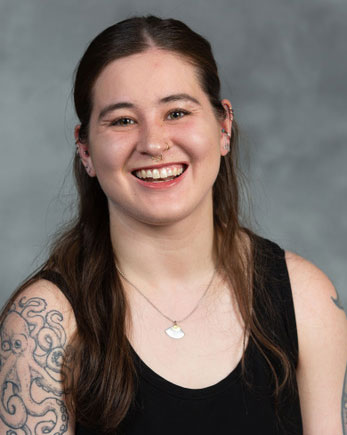
Alyssa Smith, computational social scientist and assistant professor at the College of the Holy Cross in Worcester, Massachusetts, is recognized for her integrity during a critical stage of her early career.
Smith was the first author on “Emergent structures of attention on social media are driven by amplification and triad transitivity,” published in PNAS Nexus in April 2025. Six months later, Smith — then a Ph.D. student in network science at Northeastern University in Boston — discovered a small mathematical mistake in the analysis. In the process of correcting it, she found a fatal error in the data collection code. Smith designed a new analysis and corroborated the original work. But the extent of the changes meant the original paper had to be retracted.
“All of these events transpired during Alyssa’s final year as a PhD student and while she was on the job market,” Nicholas Landry, assistant professor at the University of Virginia, wrote in his nomination letter for Smith. “She chose integrity without knowing the outcome.”
A new version of the paper is now under review at PNAS Nexus.
“The process of realizing I had made a retraction-worthy mistake, then rectifying it, was very isolating at times, even with a wonderful support system,” Smith said. “My first instinct was to make sure as few people as possible knew that I had messed up that badly, but I also spent so much time wishing I could talk to someone who had already been through a self-retraction. I hope that, by being visible as a junior scholar who has gone through this process, I can be that someone for others in the future.”
Senior Researcher Category Winner: Kate Laskowski, Ph.D.
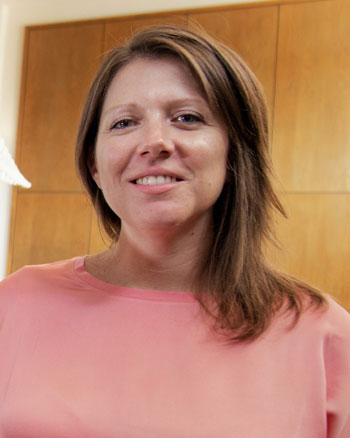
Kate Laskowski, an associate professor at the University of California, Davis, is honored for her transparency following the discovery of data fabrication by a former collaborator.
Trained as a behavioral ecologist, Laskowski had designed a series of experiments on the adaptive evolution of individual differences in behavior. She reached out to spider biologist Jonathn Pruitt, then at McMaster University to test her theories in spiders. The work resulted in three published papers. Then in 2019, shortly after joining the faculty at UC Davis, Laskowski was alerted to unexpected duplicate values in a dataset Pruitt had provided. She immediately launched a rigorous forensic investigation of her data, which confirmed the irregularities. As we reported in Retraction Watch, Laskowski announced the first retraction publicly on Twitter; all three papers were ultimately retracted. Laskowski’s detective work kicked off close scrutiny of Pruitt’s other work, ultimately resulting in 19 of his papers getting retracted.
“When I learned that several of my publications were based on fabricated data, I felt I had no choice but to retract them. It was one of the hardest decisions of my career, but it was the only one I felt I could make,” Laskowski said. “At the time, I assumed those retractions might mark the end of my career. Instead, I have been so incredibly humbled by the support of my colleagues and the broader research community, who stood behind the decision to prioritize transparency.”
Laskowski has turned the experience into opportunity. She developed a course called “Data Detectives,” teaching undergraduates to scrutinize the scientific literature. She worked with Behavioral Ecology to launch a new section of the journal devoted to replication studies. “Dr. Laskowski doesn’t just talk the talk, but she is walking the walk – she is spearheading systematic change in her research field to help shift the culture to embrace more rigorous and open research training and practices,” Artyom Kopp, professor and chair of the Department of Evolution and Ecology at UC Davis, wrote in the nomination letter for this award.
Special Commendation: Pamela C. Ronald
Pamela C. Ronald, distinguished professor in the Department of Plant Pathology and the Genome Center at the University of California, Davis, is honored with a Special Commendation for her landmark example of proactive self-correction.
More than a decade ago, Ronald discovered that two of her influential papers identifying a key protein published in Science and PLOS One contained fundamental errors due to a bacterial strain labeling mistake. Ronald notified the editors of the journals, and she announced the errors at an international conference even before the formal retractions were finalized. Her team eventually identified the correct protein in 2015. She has written about the experience and Retraction Watch has reported on Ronald’s transparency several times, and the judges wanted to extend this additional recognition in the context of the Ctrl-Z Award.
Judges
The judges for the 2026 Ctrl-Z Award were Dorothy Bishop, emeritus professor of developmental neuropsychology at the University of Oxford, and Jennifer Byrne, professor of molecular oncology and group leader for PRIMeR (Publication and Research Integrity in Medical Research) at the University of Sydney. Both Bishop and Byrne have published extensively on research integrity issues in science.
About the Ctrl-Z Award
Administered by The Center for Scientific Integrity, the parent nonprofit of Retraction Watch, the annual award honors both early-career and senior researchers who exemplify integrity in the face of perceived professional risk. (In fact, researchers who correct their own work rarely face reputation penalties.) Winners in each category receive $2,500 per individual or team.
The award’s name, pronounced “control-zee,” is inspired by the universal keyboard shortcut for the “undo” command. By honoring those who have the courage to “hit undo” on flawed research, the award aims to shift the narrative around scientific errors and highlight the importance of transparency.
The award was conceived and funded by Harvey Motulsky and Earl Beutler, both longtime supporters of Retraction Watch. (Disclosure: Beutler is related to one of this year’s honorees. Beutler did not have access to the nominations nor did he participate in any aspect of the judging or selection process.) The next award cycle will open in spring 2027. Visit https://retractionwatch.com/ctrl-z-award/ for updates.
About the Center for Scientific Integrity
The Center for Scientific Integrity is a 501(c)(3) non-profit organization whose mission is to promote transparency and integrity in science and scientific publishing, and to disseminate best practices and increase efficiency in science. Its projects include Retraction Watch, the Retraction Watch Database, the Medical Evidence Project, the Hijacked Journal Checker and the Elisabeth Bik Science Integrity Fund.